
Why a dual payload?

Adding drugs extended survival. It didn’t stop resistance.

Most new combinations add agents to the standard of care without overcoming resistance to it. Patients live longer, but each regimen stops working on a similar timeline.

Median overall survival, CRC
33months, up from ~9
≈ 3.7× over 50 years
Median progression-free survival, CRC
11months, up from ~8
≈ 1.4× over 50 years
The gap

Resistance to the backbone therapy is the bottleneck. That is what D2 is built to solve.
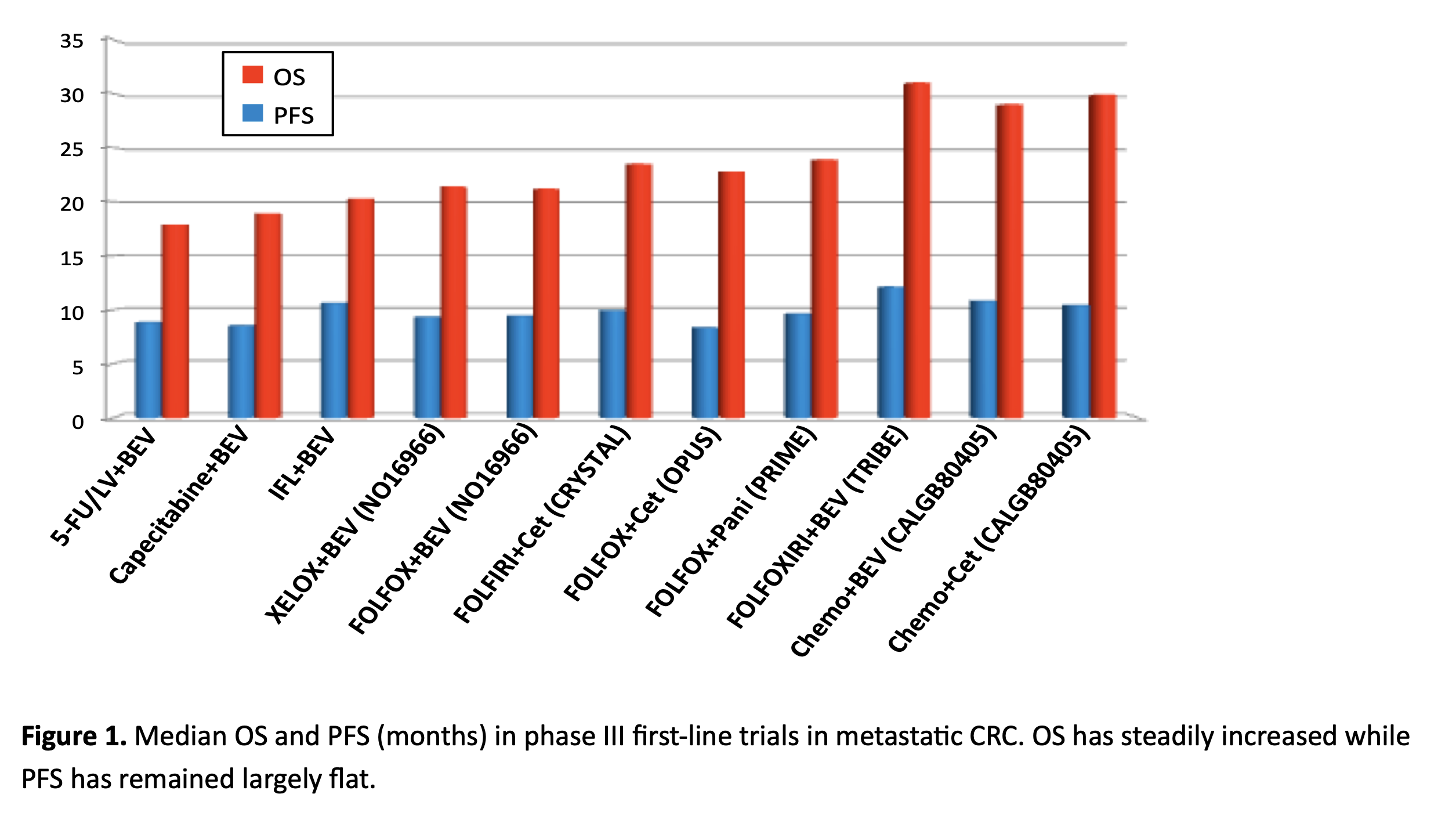
Figure 1

OS and PFS across modern first-line colorectal cancer trials

Bar chart of median OS and PFS in phase III first-line metastatic CRC trials: OS rises steadily while PFS stays largely flat
Median OS and PFS (months) in phase III first-line trials in metastatic CRC. OS has steadily increased while PFS has remained largely flat.

What overcoming CPT resistance could mean

Longer progression-free survival

Keep CPT-based therapy working longer, instead of cycling to the next regimen.

Better quality of life

Targeted delivery and fewer regimen switches for patients.

Lower system burden

Less time on failing therapy means lower cost for the healthcare system.